Santa Marta doesn’t seduce you politely.
It grabs you by the collar with heat, humidity, and the smell of salt and diesel hanging in the air. The Caribbean here isn’t manicured. It’s raw. The paint peels. The sidewalks crack. The music spills out of doorways whether you’re ready for it or not.
And that’s exactly why you come.
Three days in Santa Marta isn’t about checking boxes. It’s about surrendering to a place where the mountains fall straight into the sea and the jungle still feels like it’s winning.
Day 1: The Streets That Remember
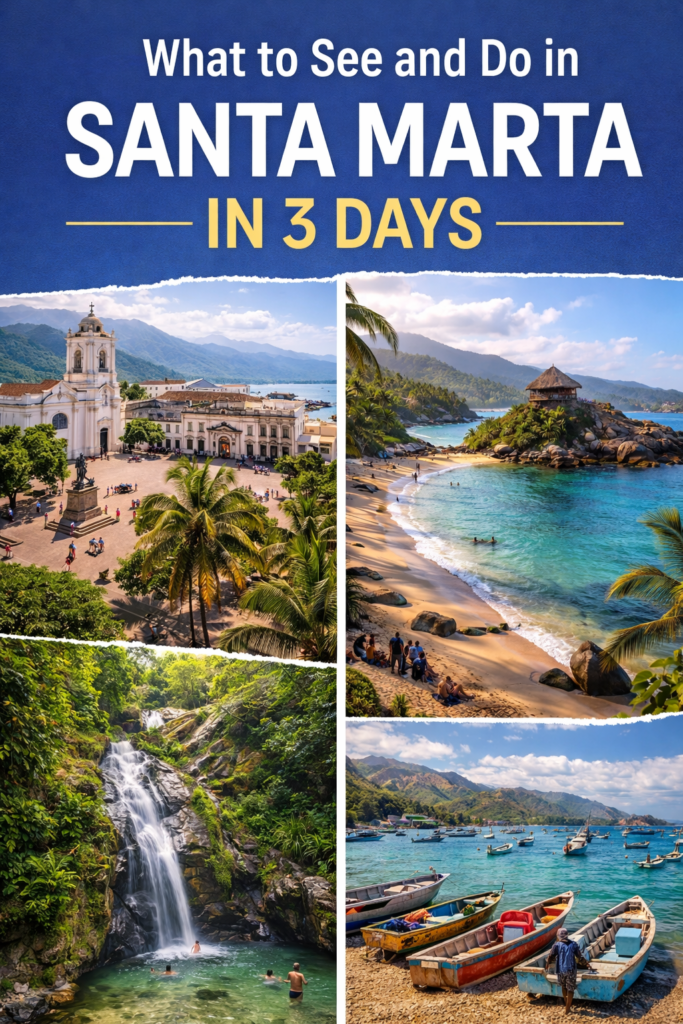
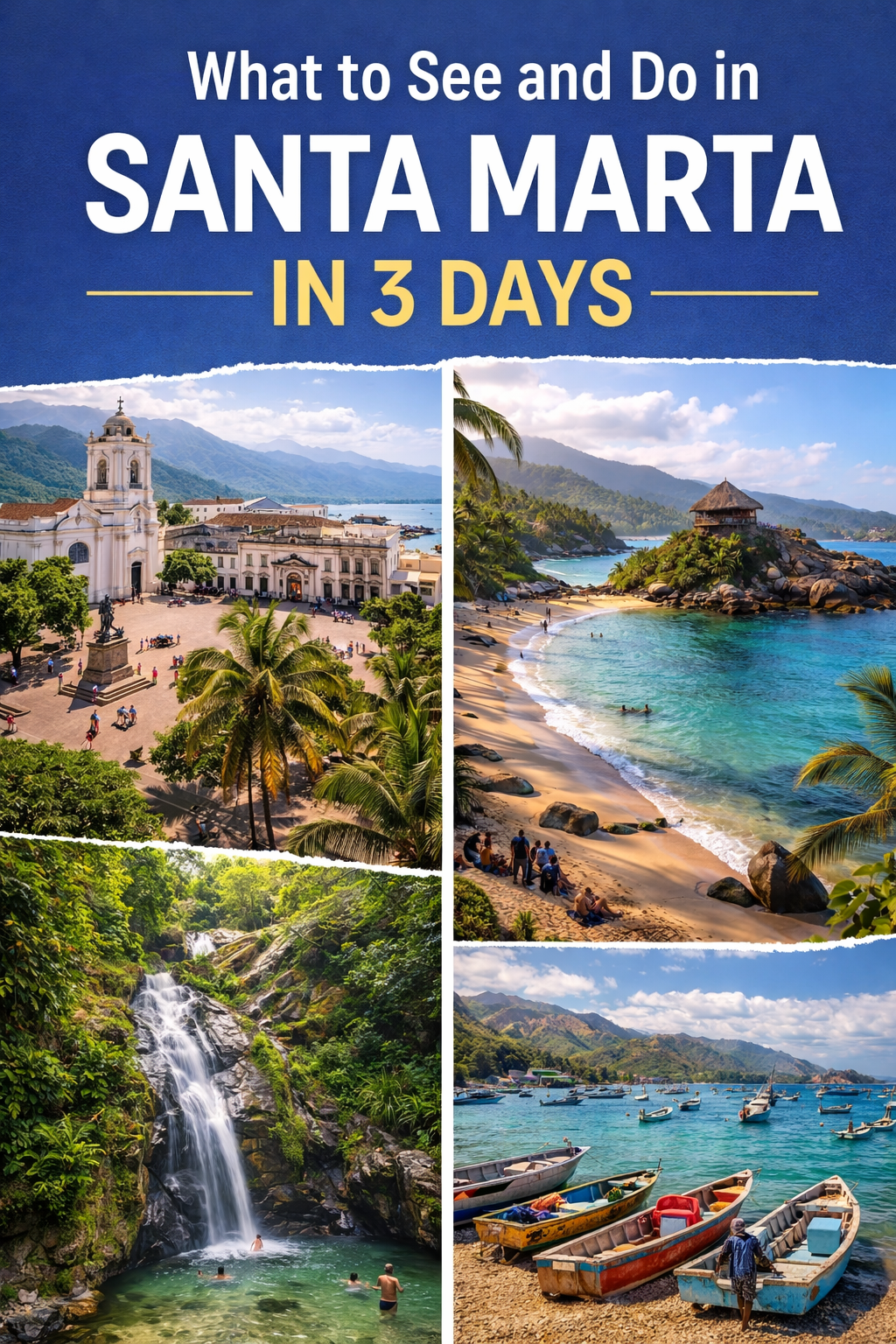
Start in the Centro Histórico de Santa Marta, early, before the sun becomes oppressive.
The buildings are colonial but worn — blues, yellows, faded whites. You’ll pass old men drinking tinto from plastic cups and women setting up fruit stands stacked with papaya and mango like tropical architecture. This city is one of the oldest in South America. It carries that weight casually.
Step inside the Catedral Basílica de Santa Marta. It’s not ornate in a European way. It’s restrained. Quiet. The kind of place where you sit for a moment just to escape the heat and listen to the echo of your own footsteps.
Around the corner, the Museo del Oro Tairona – Casa de la Aduana tells a much older story — one of the Tairona people who lived here long before conquistadors planted flags. Gold artifacts. Ceramics. Symbols of a civilization that understood this land in ways modern visitors never will.
Walk slowly. Santa Marta rewards the unhurried.
By afternoon, the sea calls. Head toward the Malecón de Santa Marta. Couples stroll. Kids chase pigeons. Fishermen repair nets like they’ve done a thousand times before. The Caribbean stretches out flat and shimmering, daring you to jump in.
If you want a fuller beach scene, make your way to El Rodadero. It’s louder. Busier. Beer vendors weave through umbrellas. The water is warm — almost bath-like — and forgiving.
As the sun drops, find yourself at Parque de los Novios. Order grilled fish. Something cold to drink. Listen to the mix of salsa, vallenato, and reggaeton competing for dominance. This isn’t curated nightlife. It’s organic, chaotic, alive.
You’ll sleep well tonight.
Day 2: Into the Green
By now you’ve felt the coast. It’s time to climb.
Forty-five minutes away, the road twists into the foothills of the Sierra Nevada de Santa Marta, the highest coastal mountain range on Earth. And tucked inside it is Minca.
Minca is cooler. Quieter. The air smells like wet earth and coffee.
Motorcycles buzz past carrying sacks of beans. Dogs nap in the shade. Somewhere, a waterfall crashes just out of sight.
Take a hike to Pozo Azul. The trail is dusty, uneven. You’ll sweat. That’s part of it. When you reach the water, it’s cold enough to shock you back to life. Jump in. Let the jungle noise wrap around you.
Visit a small coffee finca if you can. Sit on a wooden porch overlooking endless green folds of mountain. Drink something grown on the very hillside you’re staring at. No performance. No spectacle. Just farmers who know their craft.
Minca reminds you that Colombia isn’t just beaches and postcards. It’s depth. Layers. Altitude.
By late afternoon, head back down to the coast. Watch how the temperature rises with every kilometer. The Caribbean reclaims you.
If mountains aren’t your thing, there’s another path.
Go north to Taganga, a scrappy fishing village turned backpacker outpost. Boats rock lazily in the bay. The town smells faintly of salt and sunscreen.
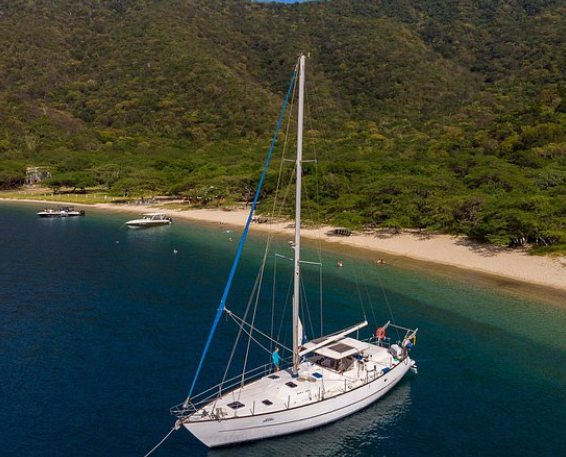
From here, take a small boat out toward beaches that feel less negotiated. Places like Playa Cristal or Bahía Concha. The water turns impossibly clear. Snorkel gear reveals flashes of blue and yellow fish darting through coral.
It’s simple pleasure. Sun. Salt. Silence under the surface.
Return by sunset. The sky bleeds orange and pink over the bay. For a moment, everything feels suspended.
Day 3: Where the Jungle Meets the Sea
Save the best for last.
Wake up early. Really early. The road east leads to Tayrona National Natural Park, and you want to beat both the heat and the crowds.
Tayrona isn’t a theme park. It’s untamed.
The hike begins in thick jungle. Roots twist across the path. Monkeys crash through trees overhead. The air is heavy — humid enough to drink. Every step feels like you’re walking into something ancient.
After an hour or two, the trees part.
And there it is.
Cabo San Juan.
Two crescent beaches divided by a rocky outcrop. Palm trees leaning toward water so blue it looks filtered by nature itself. The mountains of the Sierra Nevada rising behind you like silent guardians.
Drop your bag. Walk straight into the sea.
The water is cooler here. Cleaner. Honest.
You’ll see travelers from everywhere — Germany, Argentina, Bogotá — lying in hammocks, reading dog-eared paperbacks, arguing about politics or philosophy or nothing at all. Vendors sell coconut rice and fried fish from small kitchens that somehow appear in the jungle.
Stay as long as you can.
There are other beaches deeper inside — La Piscina, Arrecifes — but Cabo San Juan has a magnetic pull. It’s the kind of place that ruins lesser beaches for you forever.
By late afternoon, the light softens. Shadows stretch across the sand. You begin the hike back, tired but different somehow.
Santa Marta does that.
The Thing About Santa Marta
This city isn’t polished like Cartagena. It doesn’t perform for Instagram. It doesn’t care if you’re impressed.
It’s heat and history. It’s jungle pressing against concrete. It’s fishermen at dawn and backpackers at midnight. It’s coffee grown in the clouds and waves breaking against ancient rocks.
In three days, you won’t conquer Santa Marta.
You’ll taste it.
And if you’re lucky, a little of it will stay with you — long after the salt has washed off your skin.